Opportunities for Orphan Drugs in Japan
Creating Opportunities for Orphan Drugs
to Enter the Japanese Market

Market Size
-
Population: 123 million 12th in the world (Source: UNFPA, 2023)
-
One of the top 3 global pharmaceutical markets
Patient Friendly Healthcare Insurance System
-
Universal coverage of medical expenses
-
Deductions for medical expenses for patients with rare/intractable diseases
-
Well established regulatory system for new drug approval
-
Quick and firm timeline from approval to reimbursement (usually 2 months)
Accelerating Orphan Drug Development
-
Median 9 months from NDA submission to approval (orphan drug)
-
Additional benefits from the Orphan Drug Designation System
Market Needs:The Environment Surrounding Drugs for Rare Diseases
In Japan, there is significant demand for the development of unapproved rare disease pharmaceuticals. As of a 2020 survey, out of 176 domestically unapproved drugs, 90 received orphan designation from the FDA or EMA, accounting for 51% of the total unapproved drugs. There are signs of expansion in regards to "domestically unapproved drugs," which are approved in other countries but not in Japan.
Source: Seisaku-ken News, No.66, July 2022
Market Size
The Japan's population is 123 million, ranking 12th in the world. It is the third-largest pharmaceutical market in the world and has an attractive market size.
Healthcare System
Japan has a well-established public health insurance system, allowing essentially all citizens to receive medical care with a certain percentage of co-payment (ranging from 10% to 30%). Medical pharmaceutical products need government approval and a nationwide uniform drug price is set. Patients with pediatric chronic specified diseases or designated rare diseases are eligible for medical expense subsidies. Additionally, there is a system in place to provide financial assistance for high medical expenses.
For details, please refer to "Market Access: Drug Pricing and Reimbursement"
Support for Drug Development for Rare Diseases
When a pharmaceutical product is designated as an orphan drug, several benefits include:
-
Grants for research and development expenses (to alleviate development costs)
-
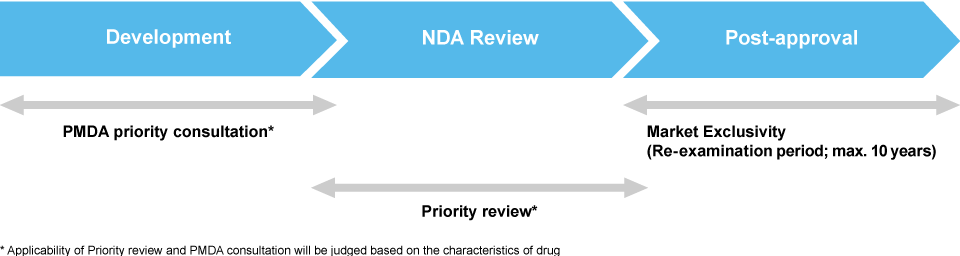
Priority review and consultation* (to enable faster provision of medical care)
-
Extension of market exclusivity period (designation as an orphan drug extends the typical 8-year re-examination period for new drugs to a maximum of 10 years)
-
Price premium (marketability premium) for NHI drug pricing